Menopause is one of the biggest turning points for bone health in a woman’s life. As oestrogen levels fall, bone mineral density, the measure of how much calcium and mineral is packed into your bones, can start to decline faster than at almost any other life stage. The good news is that there’s a lot you can do to look after your bones. Understanding what happens to bone density during and after menopause, and which nutrients and everyday habits help support it, is the first step to care for your bones for the decades ahead.
The Link Between Menopause and Bone Mineral Density
Bone mineral density (BMD) reflects how dense and strong your bone tissue is. Your bones are living tissue, maintained by an ongoing cycle of breakdown and rebuilding, and oestrogen plays a central role in that cycle. Oestrogen levels fall sharply during the menopausal transition, and the average woman loses up to 10% of her bone mass in the first five years after menopause.[1][2] This is when bone health changes fastest, which is why supporting your bone density in the years around menopause matters more than at almost any other stage of life. The good news is that there are simple, everyday steps you can take to look after your bones, which we cover below.
Why Is Vitamin D Important for Bone Health?
Vitamin D helps your body absorb calcium from food, so your bones can get the minerals they need. Despite Australia’s sunny reputation, many Australian adults have insufficient vitamin D levels,[3] so it’s worth thinking about how you’re getting yours, through safe sun exposure, food and, if needed, a supplement.
If you’d like to make sure you’re getting enough, Ostelin Vitamin D3 1000IU offers a straightforward daily dose, while Ostelin Calcium & Vitamin D3 combines both nutrients in one tablet for a 2-in-1 approach to topping up calcium and vitamin D intake.[7]
The Role of Vitamin K2 in Supporting Bone Strength
Vitamin K2 works differently to vitamin D and calcium: it activates osteocalcin, a protein in bone tissue that binds to dietary calcium and helps incorporate it into the bone.[7] That’s why K2 is generally positioned as a complement to calcium and vitamin D. Ostelin Vitamin D3 & K2 and Ostelin Calcium & Vitamin D3 + K2 Tablets combine vitamin K2 with vitamin D and calcium, so these nutrients can be taken together in a single daily dose.[7]
| Topic | Key takeaway |
|---|---|
| Bone changes around menopause | Bone changes speed up as oestrogen falls, so these years are a great time to look after your bones.[1][2] |
| Insufficient vitamin D in Australia | Insufficient vitamin D is common, even in sunny Australia.[3] |
| Vitamin D | Helps your body absorb dietary calcium; if you’re unsure about your levels, chat to your GP or pharmacist |
| Calcium | Food first, with a supplement as an option where your diet falls short.[4] |
| Vitamin K2 | Support bone mineralisation as a complement to calcium and vitamin D.[6] |
How to Support Your Bones After Menopause: Everyday Steps
There’s no single step for bone health, but a few everyday habits can make a real difference. Pick the ones that suit you and build from there:
- Move your body with weight-bearing and resistance exercise, like walking, stair climbing, dancing or strength training, to help maintain bone mass.[1]
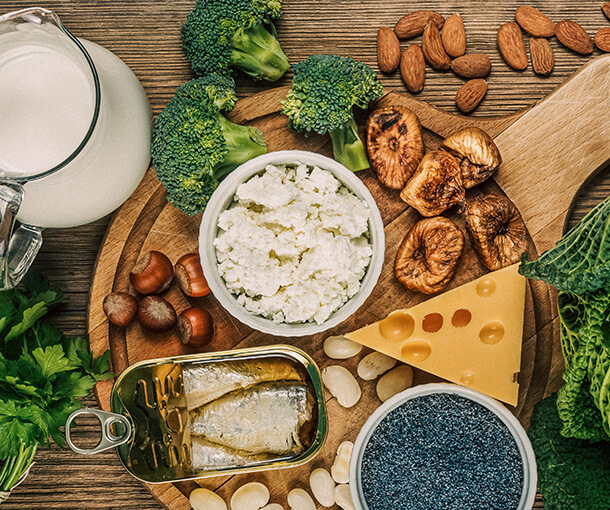
- Include calcium-rich foods in your diet, and consider a supplement if your diet falls short.[4]
- Get enough vitamin D through safe sun exposure and/or a supplement if your levels are low
- Quit smoking if you smoke, as it's linked to faster bone loss.[1]
- Keep alcohol to no more than 2 standard drinks a day.[1]
Supporting Your Bones with Ostelin
At Ostelin, we’re here to support your bone strength through different life stages. Our range covers each of the nutrients above: Ostelin Vitamin D3 1000IU as a foundation, Ostelin Calcium & Vitamin D3 for a combined calcium and vitamin D dose, and Ostelin Vitamin D3 & K2 or Ostelin Calcium & Vitamin D3 + K2 Tablets if you’d like to add vitamin K2.[7] These products are all MTick certified, which is an independent menopause-friendly credential that helps women spot products they can trust,[8] so to help you feel confident about what you choose as you look after yourself through menopause.
For broader menopause support, Ostelin Menopause Support combines several ingredients alongside calcium and vitamin D.
Always read the label and follow the directions for use. Ostelin Vitamin D3 1000IU, Ostelin Calcium & Vitamin D3, Ostelin Vitamin D3 & K2 and Ostelin Calcium & Vitamin D3 + K2 support bone strength. Ostelin Menopause Support relieves symptoms of menopause.
Frequently Asked Questions
What is bone mineral density?
Bone mineral density (BMD) is a measure of how much calcium and other minerals are packed into a section of bone. It gives an idea of how strong your bones are.
How does menopause affect bone health?
Falling oestrogen during menopause changes how your bones renew themselves. The good news is that nutrients like vitamin D and calcium, together with everyday habits like weight-bearing exercise, can help support your bones.
Why is vitamin D important for bone health?
Vitamin D helps your body absorb calcium from food, so it’s a key partner for your bones. Insufficient vitamin D is common in Australia, so it’s worth thinking about your sources.
How can I support my bones after menopause?
Weight-bearing exercise, enough calcium and vitamin D, not smoking and limiting alcohol are the everyday steps most consistently recommended by Australian bone health guidance.[1][4]
References:
- Australasian Menopause Society. Osteoporosis Information Sheet.
Link: https://menopause.org.au/images/stories/infosheets/docs/AMS_Osteoporosis_120918.pdf
- Better Health Channel (Victorian Department of Health). Menopause and osteoporosis.
Link: https://www.betterhealth.vic.gov.au/health/conditionsandtreatments/menopause-and-osteoporosis
- Healthy Bones Australia. Vitamin D and Bone Health fact sheet.
Link: https://healthybonesaustralia.org.au/wp-content/uploads/2022/10/hba-fact-sheet-vitamin-d.pdf
- Healthy Bones Australia. Calcium & Bone Health.
Link: https://healthybonesaustralia.org.au/your-bone-health/calcium/
- Medical Journal of Australia. Building healthy bones throughout life: an evidence-informed strategy to prevent osteoporosis in Australia, 2013.
Link: https://www.mja.com.au/journal/2013/199/7/building-healthy-bones-throughout-life-evidence-informed-strategy-prevent
- Frontiers in Public Health. Efficacy of vitamin K2 in the prevention and treatment of postmenopausal osteoporosis: A systematic review and meta-analysis of randomized controlled trials, 2022.
Link: https://www.frontiersin.org/journals/public-health/articles/10.3389/fpubh.2022.979649/full
- Ostelin Australia. Product pages (Vitamin D3 1000IU, Calcium & Vitamin D3, Calcium & Vitamin D3 + K2 Tablets, Vitamin D3 & K2, Menopause Support).
Link: https://www.ostelin.com.au/products/
- GenM. The MTick | Building Consumer Trust in Menopause.
Link: https://gen-m.com/the-mtick/